How to measure and reward biodiversity in dairy?
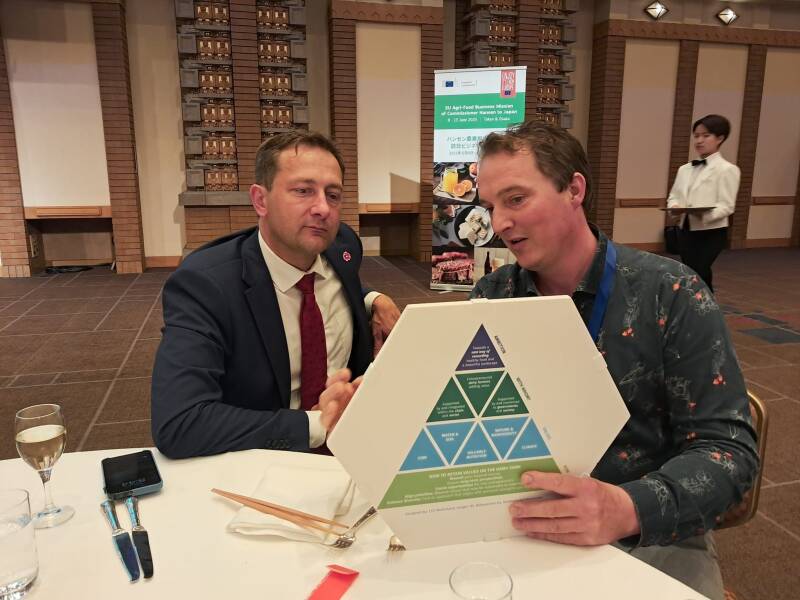
The final report of my Nuffield Scholarship is here. Twelve countries, more than 100 conversations, and one conclusion: dairy farmers hold something close to gold in their hands. The report is a milestone, not the finish line.
Download the report →
Explore the Flow Chart →
Let's continue the conversation →
The short answer
Biodiversity is not a competing goal to milk production. It is something dairy farming is uniquely placed to nurture alongside it. That takes three steps: measure what farmers do and what it delivers, report it once in a common data system owned by farmers, and reward it through several pathways at once: the dairy company, the bank, the government and the market. And we need to share the transition risk, which today sits almost entirely with the farmer.
Six key findings
- Biodiversity is a competitive advantage for every dairy system, from large grazing farms to landless farmers.
- Measurement drives action: countries with standardised monitoring see faster adoption.
- Multiple reward pathways: no single programme pays enough on its own.
- Transition risk sits with the farmer: three to seven years of lower yields and higher investment.
- Community connection matters for social license.
- Everything starts with data that farmers trust.
The journey continues
Measuring and rewarding biodiversity in dairy is still developing, and I will keep working on it. I am open to future projects and collaborations with farmer organisations, dairy companies, banks, governments and researchers.
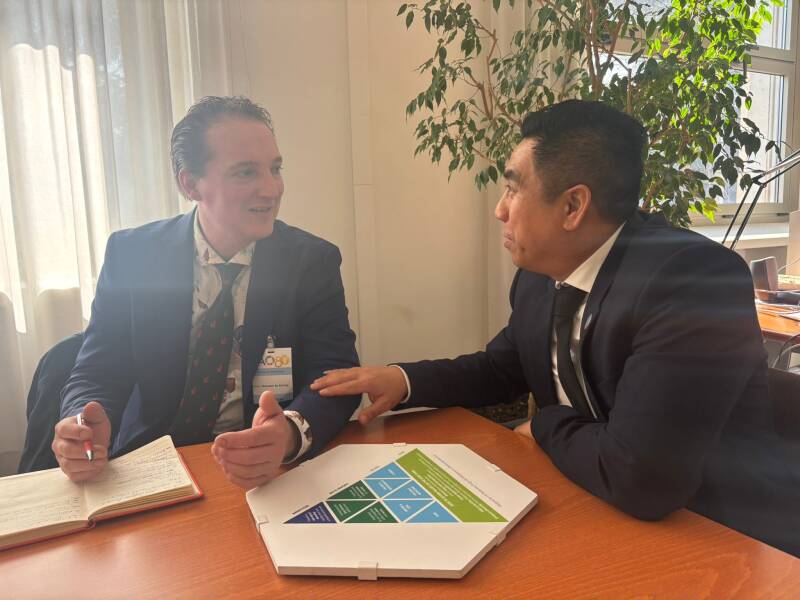
- Talks and workshops: I present the findings to farmer groups, boards, dairy companies, banks and policymakers, in English or Dutch.
- Projects and pilots: measuring frameworks, reward schemes or pilots on farms.
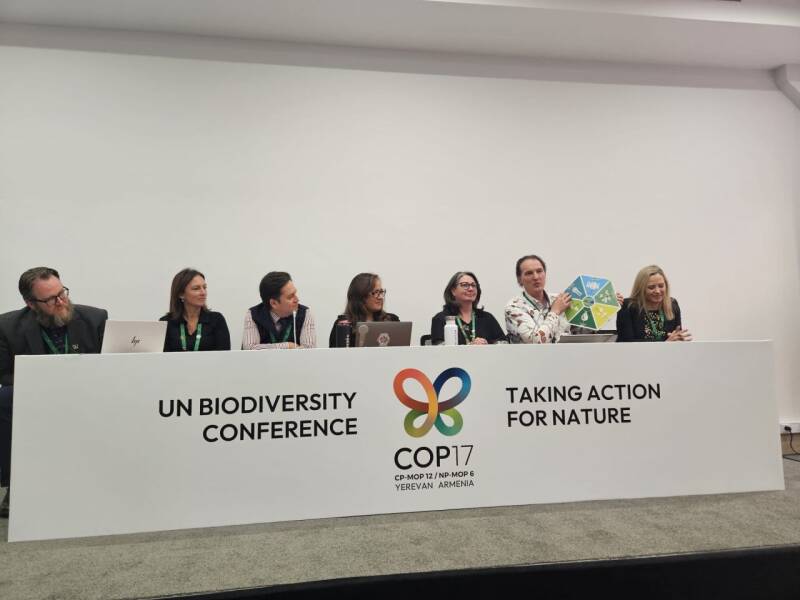
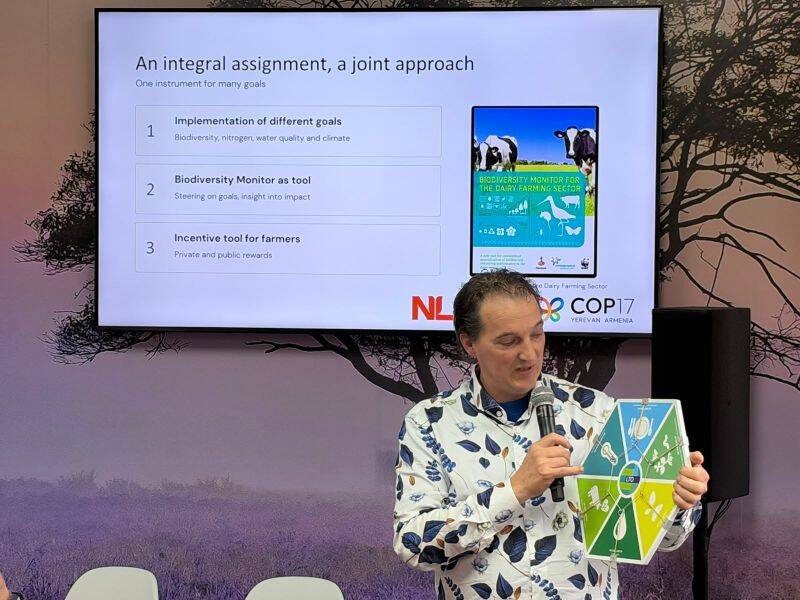
- Farmers at the table: helping farmers take part in international biodiversity policy, on the way to the next biodiversity COP.
If you would like to explore what measuring and rewarding biodiversity could mean for your organisation, I would like to hear from you.
Why I did this
I farm 135 hectares in Heiloo, next to 27,000 neighbors who see every choice we make. Nitrogen, water quality, data requests from our dairy company and bank, rising expectations from consumers: they are usually seen as threats. This research showed me that they can also strengthen the farm, if we measure what we do and are rewarded for it. That is the gold in our hands.
I wrote this report for everyone who has a part in this: farmers, dairy companies, retailers, banks, investors, policymakers, researchers and nature organisations. None of us can do it alone. My journey does not end with this report.
Wilco Brouwer de Koning – Dutch dairy farmer, Nuffield Scholar 2025
Five questions, five answers
When I started in 2025, I asked five questions. Here is what I found.
1. What exactly should we measure when we talk about biodiversity?
Four pillars: functional agrobiodiversity, diversity of landscape, diversity of species and regional biodiversity. Every dairy farm touches nature on its own land, through its feed and in the region. Four Pillars →
2. Which indicators truly reflect biodiversity performance on farms?
Clear, comparable KPIs for each pillar, such as share of permanent grassland, protein from own land, farm nitrogen balance and area of nature and landscape. Record what the farmer does next to what it delivers. Measure →
3. How can biodiversity improvements be verified and monitored?
Measure once, use many times: farm data flows automatically into one certified, transparent system owned by farmers. Start with low-cost monitoring and satellite data; add bioacoustics, eDNA and sensors where they help. Measure →
4. How can farmers be rewarded fairly for the ecosystem services they provide?
No single programme pays enough on its own. The most successful farmers stack milk price premiums, interest discounts, government payments and market access. Reward →
5. What role should dairy processors, retailers, governments and financial institutions play?
The chain shares the margin and rewards progress on shared KPIs. Government takes the first loss. Banks, investors and insurers follow once measurement is reliable. Recommendations →